ENGIE Doubles Down on Morocco: What a €0.5B African Bet Tells Us About the Clean Energy Transition

South Korea and Morocco Join Forces on $13.5 Million Green Industry Initiative

French energy giant ENGIE is quietly building one of the most compelling integrated clean infrastructure stories in Africa and Morocco sits at the heart of it.
The company's Asia, Middle East and Africa (AMEA) division generated approximately €0.5 billion in operating profit by December 2025, underpinned by a 3.9GW renewable portfolio spanning solar, onshore wind, and battery storage. Morocco is a cornerstone of that growth, operating roughly 0.4 gigawatts of onshore wind capacity, and the ambitions don't stop there.
What makes ENGIE's Morocco play particularly interesting for anyone watching the net-zero transition is the company's move into water infrastructure. ENGIE is developing a seawater desalination plant in Dakhla with an expected capacity of 100,000 cubic meters per day enough to serve hundreds of thousands of people in one of the continent's more water-stressed coastal regions.
This isn't a side project. It reflects a broader strategic thesis: that the energy transition in emerging markets cannot be decoupled from water security. Regions facing dual resource stress energy and water need integrated infrastructure solutions, not siloed ones. ENGIE appears to be betting that being the company that can deliver both, at scale, is a durable competitive advantage.
Morocco joins Egypt and South Africa as ENGIE's principal African operational bases. This is a deliberate clustering these are markets with strong renewable resource bases, improving regulatory environments, and genuine long term demand for decarbonized infrastructure.
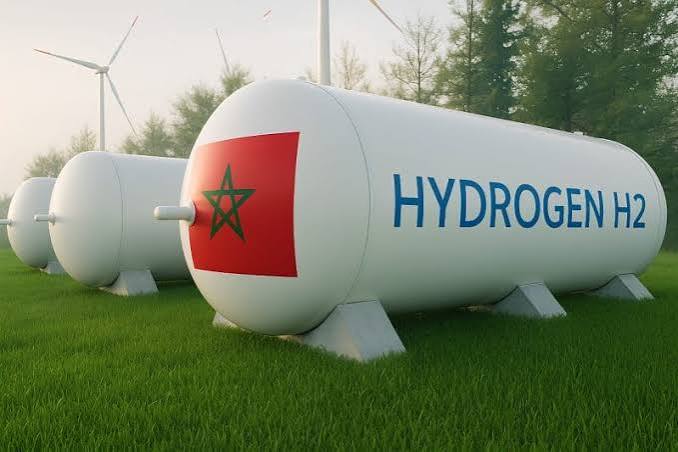
Morocco's own national ambitions are well-known: the country has targeted 52% renewable electricity capacity by 2030 and has been one of Africa's most consistent clean energy story over the past decade, from the iconic Noor solar complex to its emerging green hydrogen pipeline. ENGIE's deepening presence adds institutional weight and private capital to that trajectory.
Zooming out, ENGIE reported €71.9 billion in global revenue in 2025, with operating profit (excluding nuclear) at €8.8 billion. Renewable sources now account for approximately half of the company's electricity generation capacity. The company has set a carbon neutrality target for 2045.
The AMEA division's €0.5 billion operating profit contribution while not broken out by country signals that emerging market infrastructure is no longer a peripheral bet for ENGIE. It's a core profit engine.
A few things worth noting for those tracking corporate climate commitments and real-world clean energy deployment:
Scale matters, but integration matters more. ENGIE's model in Morocco combining wind generation, grid infrastructure, storage, and now desalination is closer to what actual energy transition infrastructure looks like in practice. Single technology bets are increasingly giving way to multi-vector infrastructure platforms.
Water-energy nexus is moving from policy paper to project pipeline. The Dakhla desalination facility is a concrete example of the water-energy nexus becoming investable infrastructure. Expect more of this as climate stress intensifies across MENA and Sub-Saharan Africa.
Emerging markets are where the transition actually gets built. With developed market grids increasingly mature, the growth frontier for clean infrastructure companies lies in markets like Morocco where demand is rising, resource potential is enormous, and the institutional frameworks are (gradually) catching up.
ENGIE's Morocco expansion won't make headlines the way a flagship solar farm or a green hydrogen announcement might. But it's precisely this kind of sustained, integrated, commercially grounded expansion that will define which companies are genuinely building the net-zero economy and which are just talking about it.