
Foreign Direct Investment in Brazil: Mining at the Center of a New Capital Cycle
.png)
Morocco Secures US Backing for $800M High Purity Polysilicon Plant: A Strategic Move to Reshape Global Supply Chains

Brazil is experiencing a sharp resurgence in foreign direct investment, positioning itself once again as one of the most attractive destinations for long-term capital in the global south. Between 2022 and 2025, foreign direct investment into the country rose by 67%, significantly outpacing the global average of 24% over the same period.
According to Brazil’s Central Bank, inflows reached US$74.3 billion between January and October 2025, already exceeding the total recorded in 2024. The trend has continued despite political noise at home and heightened geopolitical tensions abroad, suggesting that investors are increasingly focused on structural fundamentals rather than short-term volatility.
Energy, mining and agribusiness have been at the center of this renewed interest, driven by global supply chain realignment, the energy transition, and the search for secure access to strategic raw materials.
Economists point to a combination of factors behind Brazil’s recent FDI performance. The country offers a large domestic market, abundant natural resources, competitive asset valuations and a relatively diversified energy matrix with strong renewable capacity.
In addition, companies are reassessing exposure to geopolitical risk. As global supply chains fragment, capital is increasingly flowing toward jurisdictions that combine basic legal security, access to energy and distance from major conflict zones. In that context, Brazil’s long-standing geopolitical neutrality has become an unexpected competitive advantage.
“Brazil combines scale, resources and relative stability at a moment when companies are prioritizing resilience over pure cost efficiency,” said Juliana Inhasz, an economist at Insper, in recent commentary. “The entry cost remains attractive for long-term projects.”
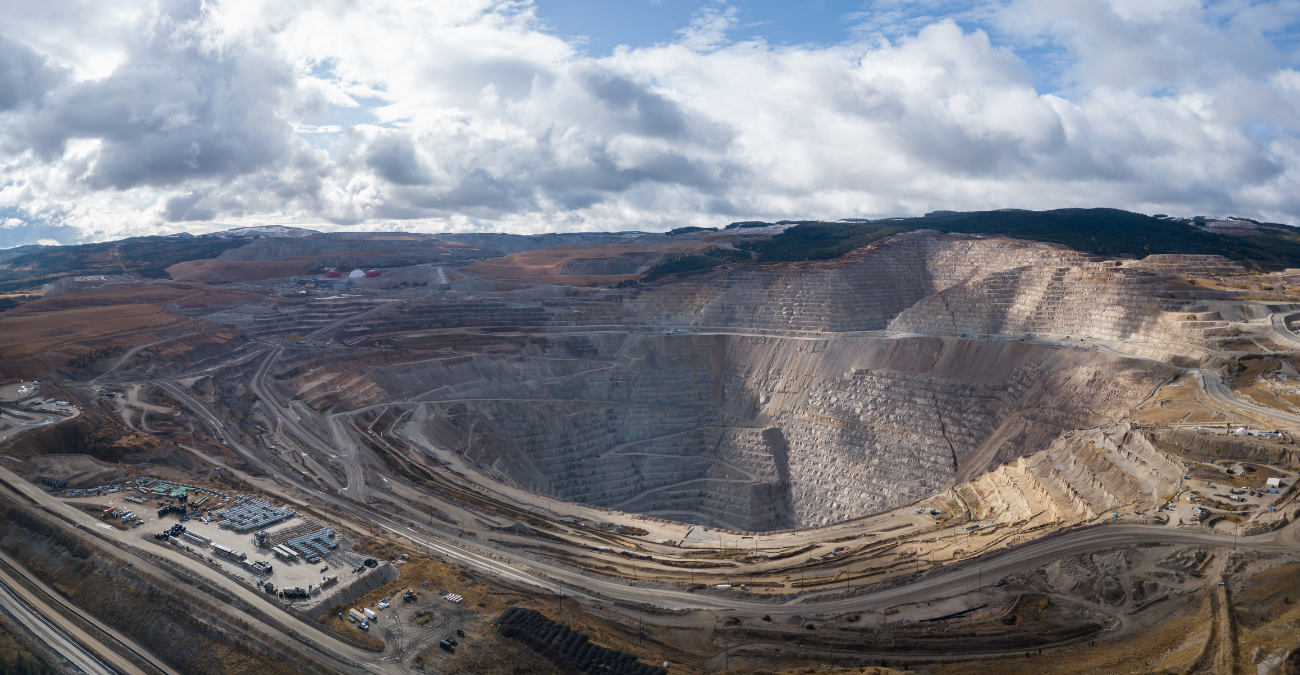
Among the sectors benefiting most from the new wave of investment, mining stands out. Alongside renewable energy and oil and gas, the sector has attracted significant foreign capital, reflecting its central role in the global energy transition and industrial decarbonisation.
According to estimates cited by McKinsey, mining and metals accounted for roughly US$6 billion in annual foreign investment flows in recent years. The figure understates the broader momentum, as it excludes geological mapping, early-stage exploration and technology partnerships that often precede large capital commitments.
The growing interest is not limited to traditional commodities. Investors are increasingly focused on strategic and critical minerals, including lithium, rare earth elements, high-grade iron ore, nickel and copper.

Rare earths and other critical minerals have moved from niche commodities to strategic assets, particularly as countries seek to reduce dependence on Chinese supply chains. While Brazil is not yet a dominant producer of rare earths, it holds one of the world’s largest geological endowments and has become a focal point for exploration and early development.
Analysts note that investment in rare earth projects is being driven as much by geopolitics as by geology. The need to diversify supply sources for batteries, electric vehicles, wind turbines and defence technologies has accelerated capital flows into jurisdictions like Brazil, where reserves remain underdeveloped.
This dynamic has opened space for Brazil to move beyond extraction and capture greater value through processing, technology and downstream integration, an ambition increasingly echoed by policymakers and development banks.
Recent announcements from across the mining sector illustrate how foreign and domestic capital is being deployed not only to expand production, but also to modernise operations, extend mine life and reduce environmental impact.
Global players and mid-sized producers alike are investing in process optimisation, waste reduction and circular mining models. Projects range from pilot plants that transform bauxite residue into construction materials and pig iron, to large-scale investments aimed at extending iron ore operations by decades through advanced beneficiation technologies.
Gold, lithium and rare earth developers are also advancing feasibility studies and pilot plants, signalling confidence in long-term demand fundamentals. Several companies have explicitly linked investment decisions to decarbonisation trends, higher-grade inputs and tighter environmental standards across global supply chains.
Public financial institutions have played a growing role in shaping the investment landscape. Brazil’s development bank BNDES has selected dozens of strategic mineral projects for potential support, with a combined investment pipeline exceeding US$8 billion. The objective is to attract private and foreign capital while aligning projects with broader industrial and geopolitical priorities.
Internationally, Brazil has also drawn interest from Middle Eastern and Asian investors, alongside traditional sources such as Europe and the United States. Capital flows from the Middle East, in particular, have expanded rapidly, reflecting a search for long-term exposure to resources critical for the energy transition.

The surge in foreign investment is already producing tangible domestic effects. These include infrastructure expansion, job creation, technology transfer and deeper integration of Brazilian companies into global value chains.
However, economists warn of structural risks. A heavy concentration of investment in commodities can reinforce historical vulnerabilities, particularly if value addition remains limited. Large-scale profit repatriation may also reduce domestic capital retention, while mining expansion raises social and environmental challenges that require robust governance.
There is also concern that prolonged currency appreciation could undermine industrial competitiveness, accelerating deindustrialisation if not accompanied by a coherent industrial policy.
Beyond rare earths, several mining and industrial players are advancing projects that illustrate the growing scale and diversity of investment in Brazil’s critical minerals and materials sector.
Serra Verde’s operation in Goiás has positioned Brazil as a rare non-Asian supplier of heavy rare earth concentrates, while Aclara Resources continues to advance its Carina project using a circular mining model designed to minimise environmental impact and avoid tailings dams.
In parallel, broader industrial investment is gaining momentum. Hydro has launched pilot projects at its Alunorte refinery in Pará to transform bauxite residue into marketable products, aiming to reduce emissions and waste. ArcelorMittal is investing approximately US$460 million in Minas Gerais to extend the life of its Serra Azul iron ore complex through a new beneficiation plant focused on higher-grade inputs aligned with lower-emission steelmaking.
Aura Minerals is also progressing the Borborema gold project in Rio Grande do Norte, reinforcing investor confidence in Brazil’s mining pipeline and regulatory environment.
Together, these initiatives signal a shift toward more integrated, technology-driven and sustainability-focused resource development, supported by both international capital and domestic policy priorities.
Maintaining the current momentum will require more than favourable geology and global demand. Analysts agree that regulatory predictability, streamlined environmental licensing, tax simplification and investment in human capital will be critical to sustaining long-term inflows.
Equally important is Brazil’s ability to move up the value chain. Processing, refining and technology development remain the missing links in many mineral supply chains. Without them, the country risks repeating a familiar pattern of exporting raw materials while importing higher-value products.
The current investment cycle offers a rare opportunity. If paired with consistent industrial policy and institutional stability, Brazil’s mineral wealth could underpin a more diversified, resilient and technologically advanced economy. Whether the recent surge in foreign direct investment marks a structural shift or a cyclical peak will depend on choices made over the next few years.

This article is based on publicly available data, industry reports and recent media coverage.
Sources:

.png)