
7 min
•
Ibtissam El Assad

Brazilian Critical Minerals acquires 90% of Sais Nordeste to secure reagent supply for Ema rare earth project

AN EXCLUSIVE INTERVIEW WITH:

Why magnesium sulphate matters for Ema

Ema is an ionic adsorption clay rare earth deposit in the Apuí region of south-eastern Amazonas, spread across roughly 189 km² of the Ema and Ema East tenements. Rather than relying on conventional open-pit mining, BCM plans to extract the rare earths through in-situ recovery (ISR): a low-concentration magnesium sulphate solution is circulated through the mineralised clay, mobilising the rare earth elements into a leach solution that is then processed on site into a mixed rare earth carbonate (MREC).

This makes magnesium sulphate the single most important input in Ema's process. By bringing its production under its own control, BCM aims to secure the availability, quality and consistency of the reagent, while significantly reducing the project's exposure to reagent supply chains that today run largely through China.

How the deal is structured

The transaction combines three agreements: the purchase of the 90% interest in Sais Nordeste, and two local Brazilian supply contracts for magnesium oxide and sulphuric acid, the main raw materials used to manufacture magnesium sulphate. Together, they give BCM a Brazil-based supply chain for its key reagent, from feedstock to finished product.

Sais Nordeste brings more than 50 years of magnesium sulphate production experience, along with established supplier relationships and existing industrial infrastructure in Brazil. Once the plant is back in operation, its initial output is expected to cover around half of Ema's projected magnesium sulphate requirements, with the potential to exceed the project's full forecast demand.

Restructuring comes first

The plant has been on care and maintenance since February 2026 and carries legacy liabilities. Under the agreed terms, BCM will immediately begin funding and managing a financial and operational restructuring of the business, with the goal of returning it to self-sufficiency. Formal transfer of the 90% ownership interest will take place only at completion, once the agreed conditions precedent have been satisfied and the necessary approvals obtained.

Managing Director Andrew Reid said BCM would work closely with Sais Nordeste throughout the process to secure "a return to sustainable commercial operations."

Where the Ema project stands

The acquisition comes a few months after BCM completed its Bankable Feasibility Study (BFS) for Ema in June 2026. The study outlines a 20-year operation producing an average of around 5,500 tonnes per year of total rare earth oxides (TREO), including about 1,900 tonnes per year of magnet rare earth oxides, in a single MREC product grading roughly 52% TREO.

The BFS points to a post-tax NPV of US$1.47 billion, an internal rate of return of 105% and Stage 1 capital expenditure of US$74 million, figures that reflect the low capital intensity of the ISR method. The project is underpinned by a mineral resource of 1.07 billion tonnes grading 732 ppm TREO.

BCM has since appointed Altris Engineering as lead design engineer for the front-end engineering and design (FEED) phase, as it works towards detailed engineering, a full mining licence application, permitting, project financing and offtake agreements.

The bigger picture

Efforts to build rare earth supply chains outside China have largely focused on mining and refining capacity. BCM's move highlights a less visible but equally strategic link: the reagents and consumables that processing depends on. Securing these inputs locally reduces both cost and geopolitical risk, and strengthens the case for Ema as an upstream supplier to the separation and refining industry now being developed in Western markets.

For Brazil, the deal is another sign of a critical minerals sector that is moving beyond exploration towards integrated, domestically anchored value chains. These are among the themes that will shape the discussions at the Brazil Lithium & Critical Minerals Summit, returning for its 4th edition in Belo Horizonte in June 2027.

‍

ARTICLES CONNEXES

November 12, 2026
•
Article

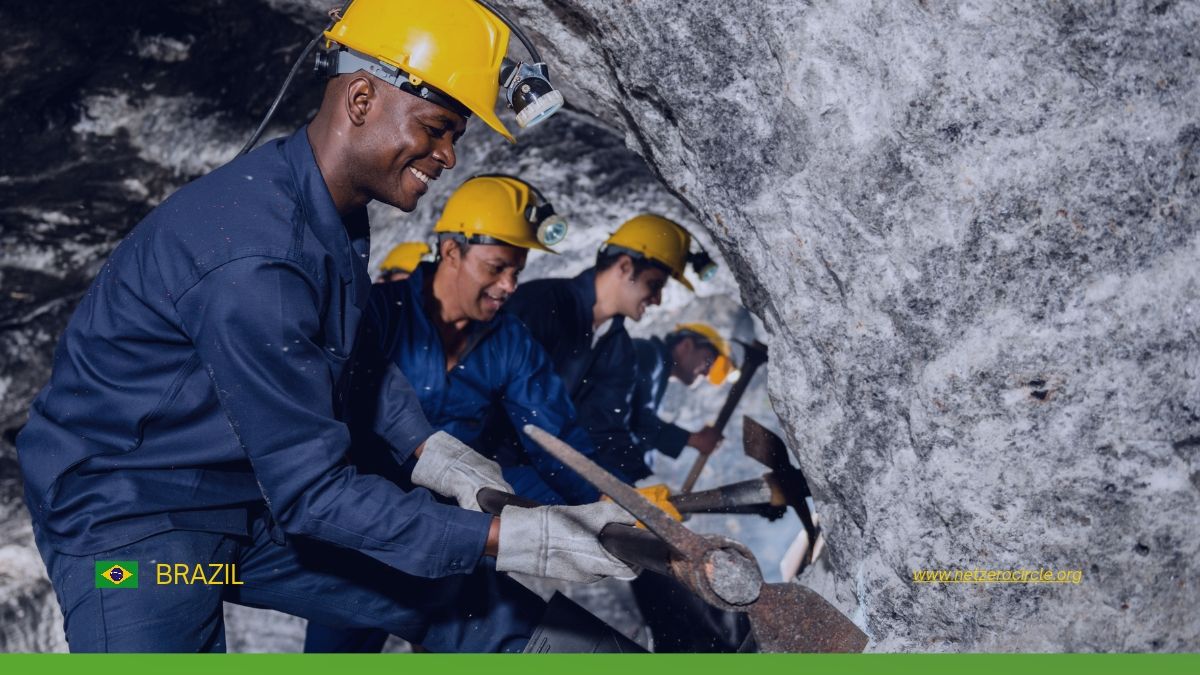
Sahamco Unveils US$25 Billion Green Hydrogen and Ammonia Project in Dakhla

12 November 2026, London (The Net-Zero Circle) Emirati company Sahamco Holding BV has unveiled plans for a US$25 billion renewable hydrogen and ammonia project in Dakhla, in Morocco's Sahara region. It is one of the largest green molecule investments announced in the Kingdom to date. The project is designed to produce one million tonnes of renewable ammonia a year, powered by Dakhla's wind and solar resources. Sahamco says it has completed feasibility and pre-front-end engineering design (Pre-FEED) studies. Several key details, however, have not yet been made public, including the project's partners, financing structure, power capacity and construction timeline.
November 11, 2026
•
Article

Brazil Names 27 Critical and Strategic Minerals in Push to Build a Domestic Supply Chain

11 November 2026, London (The Net-Zero Circle) Brazil's critical minerals strategy is moving from principle to practice. The government has approved its first official list of critical and strategic minerals, naming 27 substances that will determine which projects can access new state financing as the country seeks to process more of its mineral wealth at home. The list gives investors a clearer picture of where Brasília intends to focus its support. How much it changes in practice, however, will depend on funding, on rules that are still being drafted and on the country's ability to attract private capital.
October 23, 2026
•
News

Brazilian Critical Minerals acquires 90% of Sais Nordeste to secure reagent supply for Ema rare earth project

22 October 2026, London (The Net-Zero Circle by IN-VR) Brazilian Critical Minerals (BCM) is moving upstream of its own mine to secure the reagent its rare earth project depends on. The ASX-listed company has signed a binding agreement, through its wholly owned subsidiary Mineração BBX do Brasil Ltda, to acquire a 90% stake in Sais Nordeste Indústria e Comércio Ltda, a magnesium sulphate producer in Feira de Santana, in the state of Bahia. Financial terms have not been disclosed. The deal reflects a wider shift in how rare earth developers outside China are approaching supply risk. Securing ore and refining capacity is no longer enough; the chemicals used to process that ore matter too. By bringing magnesium sulphate production under its own control in Brazil, BCM aims to cut its reliance on Chinese reagent supply chains and strengthen its position as an upstream supplier to the rare earth industry now being built in Western markets.