Salta’s Lithium Exports Get a 240-Tonne Boost

Brazil’s New Critical Minerals Law Reshapes Investment Rules

30 September 2026, London (The Net-Zero Circle by IN-VR) Argentina’s lithium sector is moving into a new stage. Production remains the main focus, but export infrastructure is becoming just as important. On 22 September 2026, Litio Minera Argentina, a subsidiary of Ganfeng Lithium Latinoamérica, announced the launch of Salta’s first on-site customs facility for a lithium operation.
The “Aduana en Planta” facility is located at Ganfeng’s lithium chloride processing plant in the General Güemes Industrial Park. It allows cargo consolidation and customs inspection to take place at the plant before the product begins its journey to international customers.
The authorisation was issued by the Agencia de Recaudación y Control Aduanero (ARCA) under the provincial Exporta Salta programme. According to the announcement, this makes Ganfeng the first lithium operator in Salta to complete customs dispatch and inspection procedures within its own operating site.
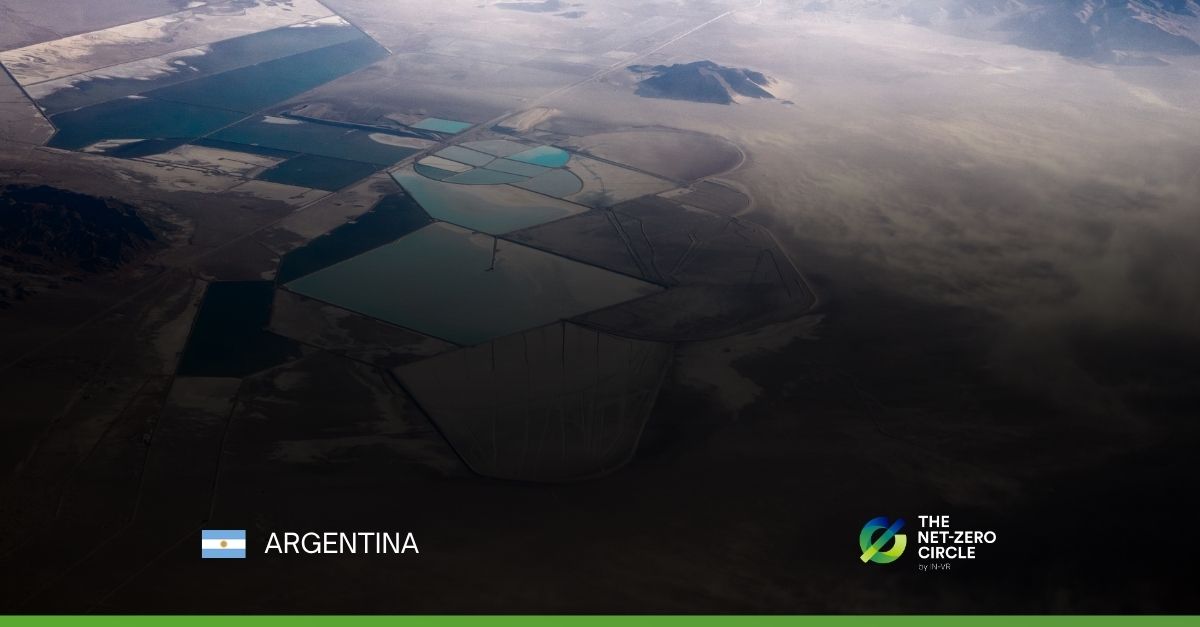
The plant processes material from the Mariana project, located in the Llullaillaco salt flat. Bringing customs procedures into the processing facility does not create new lithium resources or automatically raise production. Its value is operational: several steps in the export process can now be managed in one location.
Cargo can be consolidated, inspected and prepared for dispatch without first travelling to a separate customs point. This may reduce handling, simplify coordination and give authorities better access to information about the volume and declared value of the material.
The new arrangement follows a pilot shipment completed in February 2026. Ganfeng exported 240 tonnes of lithium chloride in 10 containers, each carrying 24 tonnes. The cargo was consolidated and inspected at the General Güemes plant before moving through a multimodal transport chain using local trucks and rail.
This shipment provided an early test of the model. Fewer intermediate transfers can reduce the number of operational handovers between the plant, customs officials and transport providers. For an exporter, that can improve scheduling and reduce the risk of delays before the cargo reaches a port or another international connection.
The benefit should not be overstated. A faster customs procedure does not guarantee a faster export. Roads, rail services, ports, shipping schedules, border controls and international freight conditions will continue to affect delivery times and costs.
A lithium project requires more than a resource and a processing plant. It also needs dependable transport, customs services, storage, power, skilled workers and accurate export documentation. These supporting systems can determine whether a project moves material smoothly or loses time between production and shipment.
General Güemes has a useful position in Salta’s developing supply chain. The industrial park connects processing activity with transport routes leading towards national and international markets. As more lithium projects expand in the province, the relationship between high-altitude production areas and eastern industrial infrastructure will become increasingly important.
The on-site customs model could also strengthen traceability. ARCA and provincial authorities can check cargo and documentation closer to the production process. At the same time, the company can organise its export preparation without sending the material first to an external inspection location.
For investors and project developers, the wider lesson is clear. Export competitiveness is built through many practical systems, not only through higher production targets. A project with reliable logistics and transparent customs procedures may be better placed to serve customers consistently.
The facility is an important operational improvement, but it does not remove the wider constraints facing Argentina’s lithium industry. Long distances, limited rail coverage in some areas, changing mineral prices and coordination between public and private operators remain significant issues.
The next test will be regular performance. Industry observers will need to see whether future shipments use the facility consistently, whether handling times fall and whether the model can be adapted by other mineral operators.
The development may also encourage a broader discussion about export infrastructure in Argentina. If customs services can be placed closer to processing, similar approaches could support other mineral projects where distance and complex logistics add to operating costs.
Ganfeng’s next milestone will be the continued use of the facility for exports from General Güemes. Shipment frequency, transport reliability and the time required to move cargo from the plant to international markets will show whether the new system delivers its expected benefits.
For Salta, the facility links three important parts of the lithium chain: production in the Andes, processing in an industrial area and customs control before export. That connection could become more valuable as Argentina seeks to expand lithium exports while retaining more processing activity inside the country.
Ganfeng’s “Aduana en Planta” facility is a modest but meaningful development in Argentina’s lithium sector. The 240-tonne pilot shipment demonstrated that lithium chloride could be consolidated and inspected at the processing plant before moving by road and rail.
The development does not solve every transport problem, and it does not increase production by itself. Its importance is practical. If the system makes export handling more predictable, it could improve the efficiency, traceability and scalability of Salta’s lithium supply chain.