5 min
•
Ibtissam El Assad

Morocco Secures US Backing for $800M High Purity Polysilicon Plant: A Strategic Move to Reshape Global Supply Chains

AN EXCLUSIVE INTERVIEW WITH:

The United States has committed to backing Sondiale SA's ambitious polysilicon production facility, a strategic decision driven by Washington's urgent need to diversify suppliers beyond China, which currently controls over 90% of global polysilicon production. This high purity material is essential for both semiconductor manufacturing and solar panel production, two industries critical to the global energy transition and technological advancement.

The US International Development Finance Corp has already secured $4.75 million in funding for Sondiale SA, an affiliate of GreenPower Morocco, with a US primary contractor set to develop the facility specifically to supply high purity polysilicon to the United States and allied nations.

A Game Changer for Morocco's Industrial Landscape

Signed in November, the investment agreement will establish an industrial unit with an impressive annual production capacity of 30,000 tons. The facility promises substantial economic impact, creating 1,500 direct jobs and over 2,000 indirect employment opportunities in the Tan-Tan region of southern Morocco.

With 85% of production earmarked for export to international markets, Morocco is strategically positioning itself at the heart of a reconfigured global supply chain. Target markets extend beyond the US to include the European Union, Japan, South Korea, and Malaysia, among others.

"Morocco's partners want to diversify the global supply chain," emphasized Tayeb Amegroud, Sondiale's executive director, highlighting the geopolitical significance of this development.

Reinforcing Morocco's Renewable Energy Leadership

This polysilicon project aligns seamlessly with Morocco's broader renewable energy ambitions. The North African nation has set an ambitious target of generating 52% of its electricity from solar sources by 2030, and renewable resources already contribute over 45% to Morocco's electricity grid a testament to the country's commitment to sustainable energy transformation.

The establishment of a domestic polysilicon production facility creates a powerful synergy: Morocco can now not only deploy solar energy at scale but also manufacture a critical component of solar panels, positioning itself as both a renewable energy leader and a key supplier in the global clean energy supply chain.

Strategic Implications for Global Energy Security

This development represents more than an industrial investment, it's a strategic realignment of global supply chains in response to geopolitical realities. By establishing production capacity in Morocco, the US and its allies are creating resilient alternatives to China dependent supply chains, particularly for materials critical to both the energy transition and advanced technology sectors.

Morocco's geographic proximity to Europe, political stability, and growing expertise in renewable energy make it an ideal partner for Western nations seeking to secure their supply chains while advancing decarbonization goals.

As global demand for semiconductors and solar panels continues to surge, Morocco's polysilicon facility positions the kingdom as an indispensable link in the clean energy and technology supply chains of tomorrow.

‍

ARTICLES CONNEXES

novembre 16, 2026
•
Article

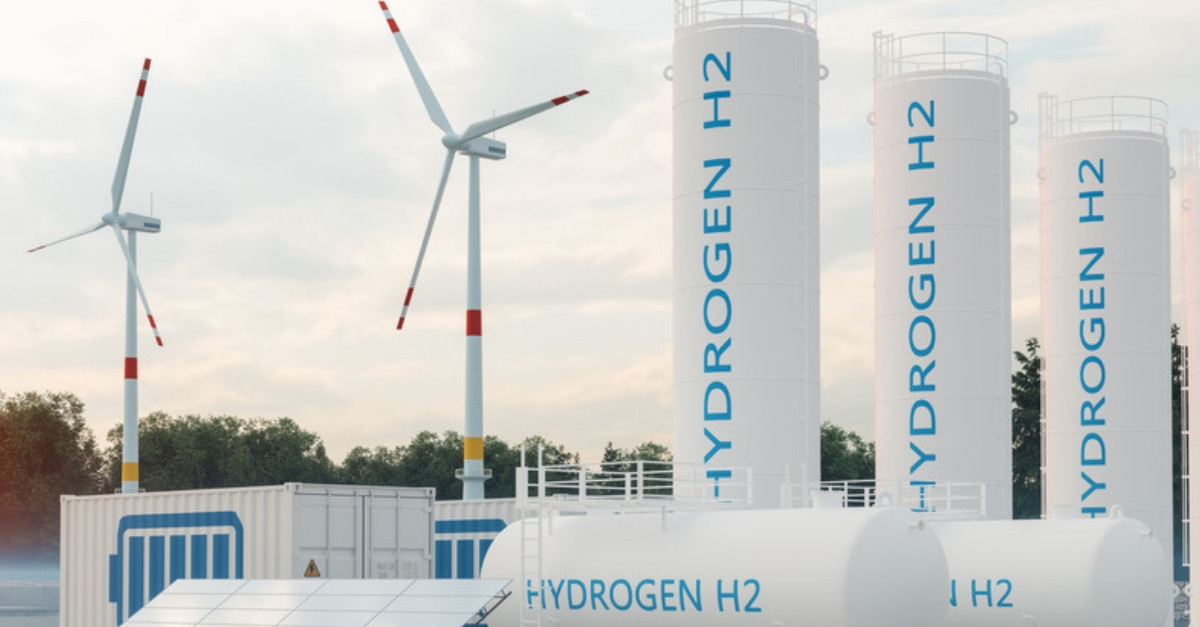
Sahamco Unveils US$25 Billion Green Hydrogen and Ammonia Project in Dakhla

12 November 2026, London (The Net-Zero Circle) Emirati company Sahamco Holding BV has unveiled plans for a US$25 billion renewable hydrogen and ammonia project in Dakhla, in Morocco's Sahara region. It is one of the largest green molecule investments announced in the Kingdom to date. The project is designed to produce one million tonnes of renewable ammonia a year, powered by Dakhla's wind and solar resources. Sahamco says it has completed feasibility and pre-front-end engineering design (Pre-FEED) studies. Several key details, however, have not yet been made public, including the project's partners, financing structure, power capacity and construction timeline.
novembre 16, 2026
•
Article

Brazil Names 27 Critical and Strategic Minerals in Push to Build a Domestic Supply Chain

11 November 2026, London (The Net-Zero Circle) Brazil's critical minerals strategy is moving from principle to practice. The government has approved its first official list of critical and strategic minerals, naming 27 substances that will determine which projects can access new state financing as the country seeks to process more of its mineral wealth at home. The list gives investors a clearer picture of where Brasília intends to focus its support. How much it changes in practice, however, will depend on funding, on rules that are still being drafted and on the country's ability to attract private capital.
octobre 23, 2026
•
News

Brazilian Critical Minerals acquires 90% of Sais Nordeste to secure reagent supply for Ema rare earth project

22 October 2026, London (The Net-Zero Circle by IN-VR) Brazilian Critical Minerals (BCM) is moving upstream of its own mine to secure the reagent its rare earth project depends on. The ASX-listed company has signed a binding agreement, through its wholly owned subsidiary Mineração BBX do Brasil Ltda, to acquire a 90% stake in Sais Nordeste Indústria e Comércio Ltda, a magnesium sulphate producer in Feira de Santana, in the state of Bahia. Financial terms have not been disclosed. The deal reflects a wider shift in how rare earth developers outside China are approaching supply risk. Securing ore and refining capacity is no longer enough; the chemicals used to process that ore matter too. By bringing magnesium sulphate production under its own control in Brazil, BCM aims to cut its reliance on Chinese reagent supply chains and strengthen its position as an upstream supplier to the rare earth industry now being built in Western markets.