5 min
Ibtissam El Assad

Saudi Arabia and Morocco Deepen Energy Partnership with New Renewables Program

AN EXCLUSIVE INTERVIEW WITH:

Saudi Arabia and Morocco have taken a fresh step toward closer energy cooperation after Saudi Arabia’s Energy Minister, Prince Abdulaziz bin Salman, met Morocco’s Minister of Energy Transition and Sustainable Development, Leila Benali, in Riyadh. The discussions focused on shared priorities in the evolving energy landscape most notably renewable energy deployment and improved energy efficiency.

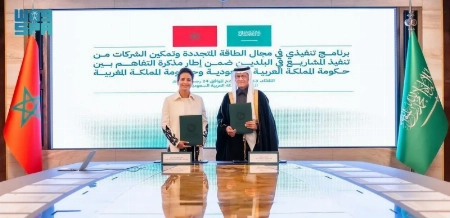
The meeting concluded with the signing of an executive program intended to accelerate joint work on renewables under a broader memorandum of understanding on energy cooperation first agreed by the two governments in May 2022. While the original MoU set the framework, the new program is positioned as an implementation track, translating high-level intent into coordinated projects, institutional collaboration, and investment pathways.

Expanding Projects at Home and Beyond

At the core of the executive program is an effort to deepen bilateral ties while unlocking mutual investment opportunities. A key feature is the explicit role of national companies from both countries, which the program enables to jointly develop and execute renewable energy projects not only within Saudi Arabia and Morocco, but also in third markets. This outward looking dimension signals ambitions that extend beyond domestic capacity expansion, aiming instead at building joint capabilities that can be exported regionally and internationally.

Cooperation Across the Renewables Value Chain

The program outlines a broad scope of technical cooperation that spans the critical elements needed to scale renewables reliably. Areas of collaboration include:

  • Renewable electricity generation
  • Energy storage solutions
  • Grid integration for variable renewable supply
  • Electricity transmission and grid development
  • Incorporating renewables into major infrastructure and development initiatives

By addressing both generation and the enabling grid infrastructure, the cooperation framework reflects a practical understanding of what it takes to move from renewable targets to stable, system wide delivery.

Research, Training, and Knowledge Transfer

Beyond project development, the two sides also plan to invest in the institutional foundations of the energy transition. The executive program includes the establishment of research and training centers aimed at advancing renewable energy technologies, strengthening workforce capacity, and supporting structured knowledge transfer between the two countries.

During the talks, the ministers underscored the role of scientific research and innovation in enhancing competitiveness and creating added value particularly highlighting mining services as an area where innovation can deliver strategic advantage. They agreed to sustain close coordination between technical teams, with an emphasis on encouraging private sector participation, attracting investment, and building partnerships among training institutions, research centers, and specialized engineering organizations.

Parallel Momentum on Sustainable Mining Governance

In a related development, Minister Benali has also been advancing regional collaboration in mining governance. In November, she signed a strategic memorandum of understanding in Marrakech with the Africa Minerals Strategy Group during the opening of the Morocco International Mining Congress. That agreement aims to support responsible and sustainable mining practices across Africa, including work toward a continent wide ESG framework and the Origination Transit Certification corridor.

A Broader Signal of Strategic Alignment

Taken together, the Riyadh meeting and the new executive program reflect a broader convergence: pairing renewable energy scale up with the institutions, skills, and governance frameworks needed to sustain long term transformation. For Saudi Arabia and Morocco, the initiative also positions cooperation as a platform not only for domestic progress, but for joint participation in the expanding renewable and energy infrastructure opportunity set across third markets.

POSTAGENS RELACIONADAS

February 3, 2026
Article

Taqa Morocco and JBIC Partner to Advance Sustainable Energy Infrastructure

2 February 2026, Taqa Morocco and JBIC have signed an MoU to finance sustainable energy and water infrastructure projects through 2030. The agreement supports Morocco’s decarbonization goals and strengthens energy security by leveraging Japanese investment and expertise to modernize the Kingdom’s utility sector.
January 30, 2026
Article

Mining in the Andes: Critical Minerals and the Next Phase of Global Investment

30 January 2026, London (The Net-Zero Circle by IN-VR) – The Andean region is re-emerging as a strategic hub for copper and lithium as global demand for critical minerals shifts from cyclical to structural. For long-term investors aligned with the net-zero transition, the Andes offer scale, asset longevity and growing geopolitical relevance within global energy supply chains.
January 27, 2026
Article

Renewable Energy Revolution in Morocco: How Masen Is Using GIS to Accelerate Clean Power Development

27 January 2026, London (The Net Zero-Circle by IN-VR) -- Morocco’s renewable energy ambitions are entering a new phase as Masen prepares to launch a nationwide GIS platform in 2026. The system will centralize geospatial data on solar and wind resources, helping optimize site selection, streamline project planning, and support the country’s goal of exceeding 52% renewable electricity in the coming years.